Why Home Service Websites Lose Calls (Even When People Are Visiting)
Updated: 7 days ago
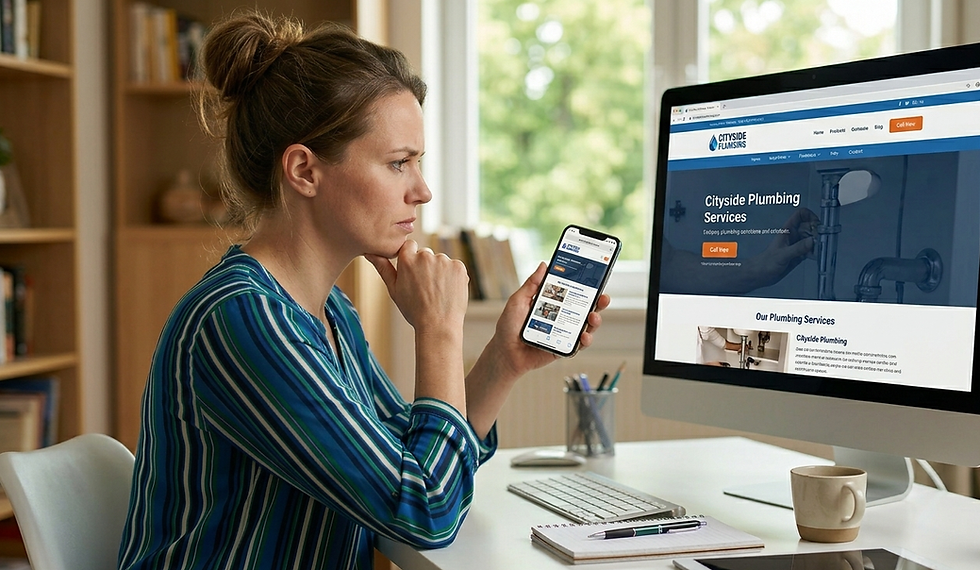
For home service businesses, every inquiry matters. Whether you provide HVAC, plumbing, electrical, roofing, or other residential services, prospective customers are often looking for help with an immediate problem.
When they find your business online, they aren't browsing. They're trying to solve a problem. And if your website slows them down—even for a few moments—they may contact someone else.
What Homeowners Are Really Looking For
Imagine someone's furnace stops working on a cold evening. Or they discover a leaking pipe. Or the garage door won't open before work.
They search online, tap your website, and immediately begin asking themselves:
Can this company help me?
Do they serve my area?
Can I contact them right now?
How quickly will someone respond?
If those answers aren't obvious, they'll often return to search results and call the next company.
Why Calls Are Lost
1. The Mobile Experience Creates Delays
Most emergency searches happen on a phone.
If your website loads slowly, is difficult to navigate, or makes visitors search for your phone number, every extra second increases the chance they'll leave.
2. Contacting You Takes Too Much Effort
When someone needs service, they don't want to complete a lengthy form.
They want the fastest path to help.
Prominent phone numbers, simple contact forms, and one-tap calling reduce hesitation and encourage more inquiries.
3. Visitors Don't Know What Happens Next
Many websites ask visitors to "Contact Us" without explaining what comes next.
Will someone call back today?
Can they schedule online?
Do you provide emergency service?
Reducing uncertainty often increases confidence.
4. The Website Doesn't Reinforce Trust
When homeowners need help quickly, they're also making a decision about who to trust.
Visible reviews, years in business, certifications, and examples of completed work help reassure visitors they're making the right choice.
Speed Wins
For many home service businesses, the first company a homeowner feels confident contacting often earns the job.
That means your website has two responsibilities:
Help people understand you quickly.
Help people contact you immediately.
Those two goals are often more important than adding additional pages or redesigning the entire site.
Small Improvements Can Make a Big Difference
Most businesses don't need a completely new website. Often, a few practical improvements have the greatest impact:
More visible phone numbers.
Clearer calls-to-action.
Better mobile usability.
Simpler contact forms.
Stronger trust signals.
Clear expectations for what happens after someone reaches out.
Together, these improvements help remove hesitation during an already stressful situation.
Try This Simple Test
Open your website on your phone.
Ask yourself:
Can I immediately tell what this business does?
Can I call with one tap?
Do I know they serve my area?
Do I trust them?
Do I know what happens after I contact them?
If any answer isn't immediately clear, prospective customers may be experiencing the same uncertainty.
Want a Second Opinion?
If you're wondering why website visitors aren't becoming phone calls, I'd be happy to take a look.
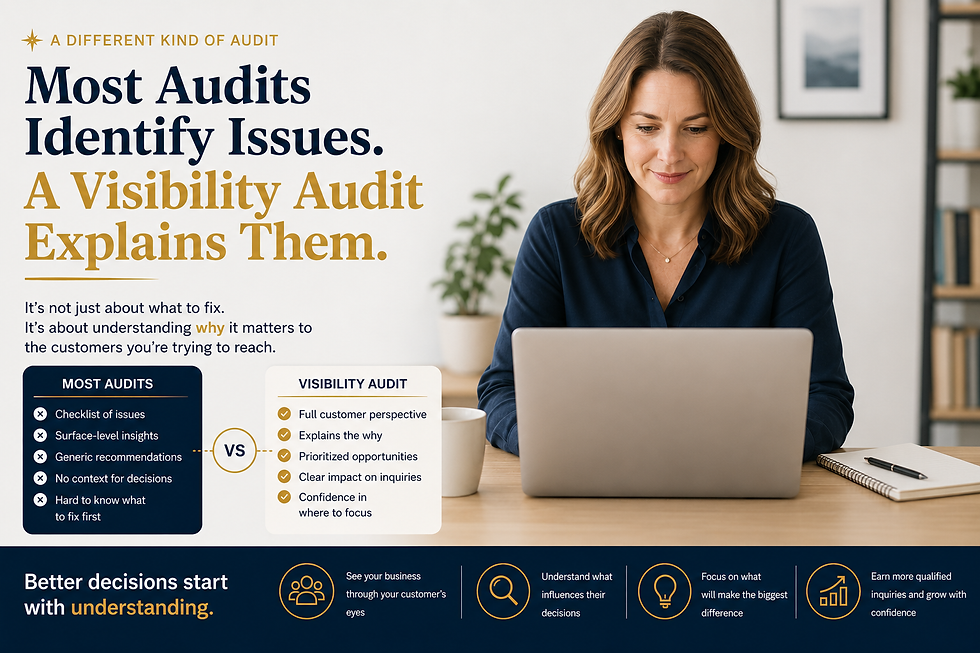
I'll review how prospective customers experience your business—from search results through the decision to contact you—and provide a straightforward summary of what's working well, where opportunities may exist, and whether a full Visibility Audit would be worthwhile.
There is no cost, no obligation, and no sales pressure.


Comments